



Culatra Island: The Soul of Traditional Fishing
In the heart of the Ria Formosa, Culatra Island is first and foremost a fishing community with a deep connection to the sea. For nearly two centuries, families have lived here to the rhythm of the ocean, fishing, the tides and community life. The island is made up of three inhabited areas: Culatra, Hangares and Farol, each with its own identity.
Administratively, Culatra Island belongs to the municipality of Faro. Yet it lies just opposite Olhão, which is also the nearest town on the mainland and one of the main gateways to the island. And when you talk to local residents, their identity is often even simpler: they are first and foremost from Culatra, with a strong attachment to the island and its community.
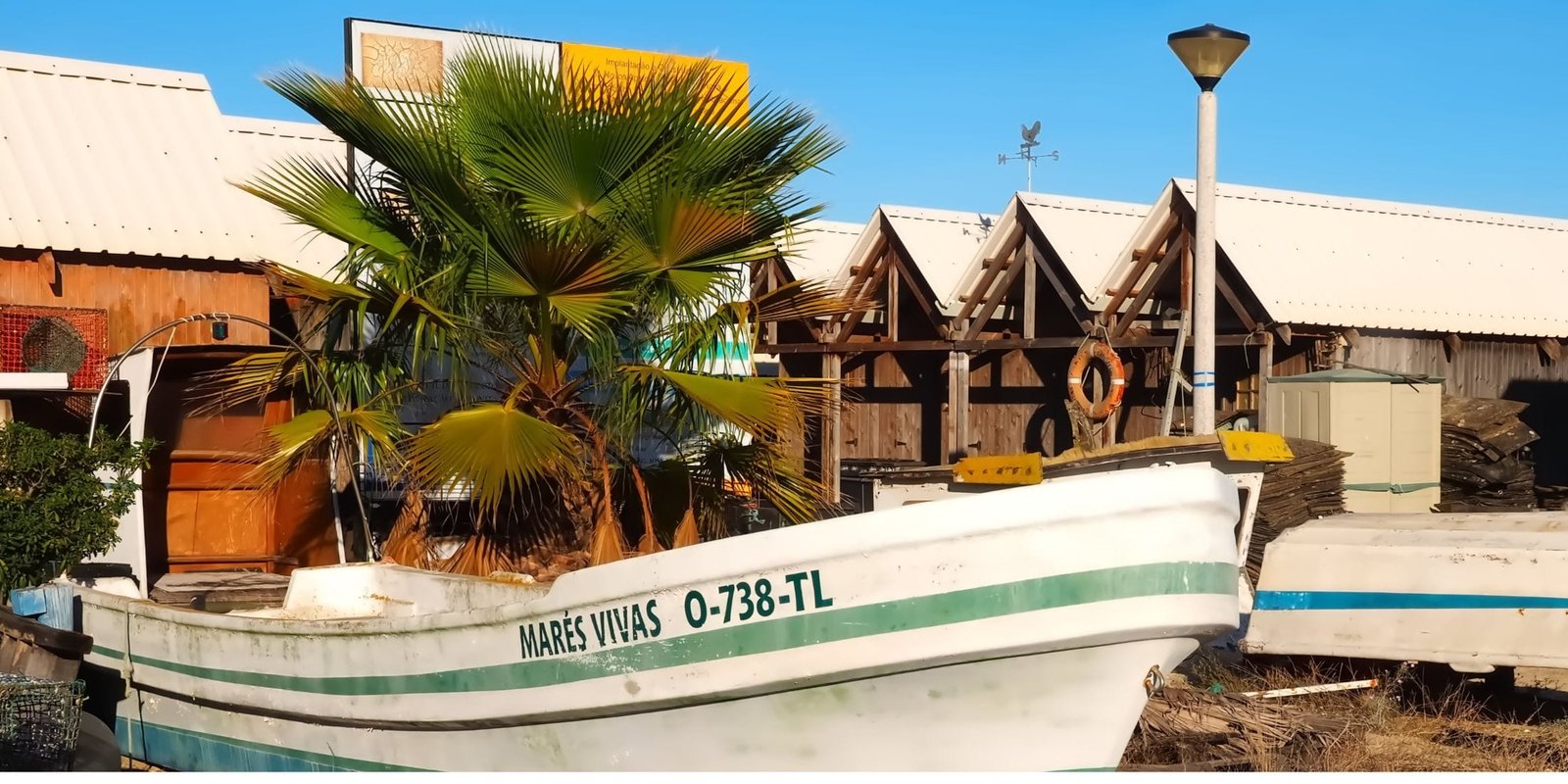
The Culatra settlement is a true fishing village, with a life that goes far beyond the tourist season. Fishing is not just part of the scenery here: it is still part of everyday life. Boats, nets, traps, oysters, fishing gear and small working areas are all part of the village and a reminder that Culatra remains an active maritime community.
It is precisely this raw authenticity that gives Culatra so much of its character. This is not an island staged for visitors: it is a real place where people live, children go to school and local life revolves around the club, the chapel, restaurants and the fishing harbour. Just a short boat ride from Olhão or Faro, you discover a very different side of the Algarve, much closer to the everyday life of the Ria Formosa.
In this guide, we take you beyond Culatra’s beach: how to get there, life in the fishing village, local traditions, where to eat, the walk to the Atlantic beach, Hangares and Farol, where to stay and practical tips to make the most of your time on the island.

How to Get to Culatra Island from Olhão or Faro
From Olhão: Ferry to Culatra
Culatra Island is accessible all year round by ferry from Olhão. The crossing usually takes around 30 to 45 minutes, depending on the route and the order of stops between Culatra and Farol. The journey takes you across the Ria Formosa and gives you a first glimpse of its landscape before you even reach the island.
Ferry times vary depending on the season and tickets are purchased directly at the ticket offices near the ferry terminal. To plan your day, check our dedicated page with the latest Olhão to Culatra ferry times, prices and practical information.
In July and August, the boats can get particularly busy, especially for the return journey at the end of the day. If you want to avoid a long wait, it is best to arrive at the pier with plenty of time.
From Faro: Another Way to Reach Culatra
You can also reach Culatra by boat from Faro. This is a convenient option if you are staying in Faro or nearby.
The schedules published on Amo-te Olhão mainly cover departures from Olhão. If you are travelling from Faro, make sure to check the relevant boat times and conditions directly before your trip.
By Water Taxi: Faster and More Flexible
Water taxis also connect Olhão with Culatra. They are faster and more flexible than the regular ferries, making them especially useful if you are travelling in a group, carrying luggage, want to leave at a specific time or simply want to avoid a long wait during the busy summer season.
The price is naturally higher than the regular ferry, but it can become good value when shared between several passengers. You can find water taxi prices, contacts and practical information from Olhão on our dedicated page.
Tickets, Drop-Off Area and Parking in Olhão
Ferry tickets to Culatra can be purchased directly at the ticket office near the Olhão ferry terminal. On the island, there is also a ticket office where you can buy your return ticket.
If you are arriving by car with luggage, groceries or beach equipment, there is a short-stay drop-off area at the entrance to the street directly opposite the ferry terminal. It is a convenient place to unload before the driver goes to park the car.
Close to the ferry terminal, the large Avenida 16 de Junho car park is one of the available options. You may also find parking in the surrounding streets. Before setting off, check our guide to parking in Olhão.
Discover Culatra on a Ria Formosa Boat Trip
Another way to discover Culatra is to join a boat trip through the Ria Formosa. The excursion we recommend includes a stop at Culatra, allowing you to combine the lagoon experience with some free time on the island.
Culatra: At the Heart of a Fishing Village
A Maritime Community, Not a Tourist Backdrop
Culatra is first and foremost a real fishing village. Fishing here is not a memory from the past or something staged for visitors: it is still part of everyday life for many local families.
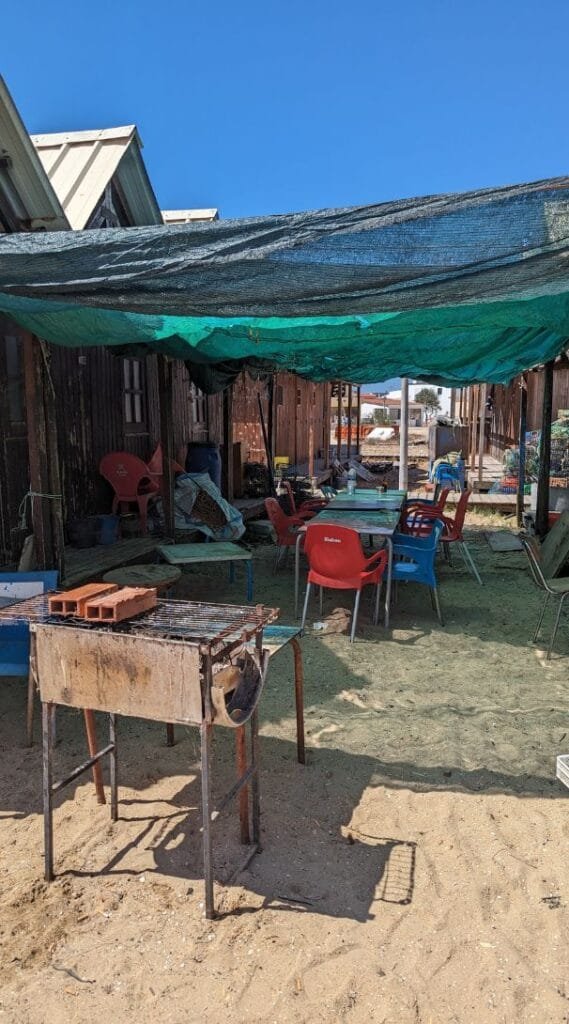
When you arrive on the island, turn left from the ferry pier and wander through the area used by the fishing community. It is rougher and less polished than the main village streets, and that is exactly what makes it interesting: nets, traps, boats, working equipment and simple fishermen’s huts reveal a much more authentic side of Culatra.
You may see fishermen untangling or repairing their nets, preparing their gear or returning from the sea. It is also common to see people working with shellfish and oysters, sorting and cleaning them before they are sold.
Fishing, Shellfish Gathering and Oyster Farming
Professional fishing, shellfish gathering and aquaculture remain central to the local economy. The Ria Formosa provides particularly favourable conditions for shellfish farming and harvesting, and oysters, clams and other products from the lagoon are an important part of everyday life in Culatra.
The fishing harbour and the facilities around the pier are still used for professional activities, including transporting equipment, launching boats, storing fish, producing ice and providing other services directly linked to the work of local fishermen.
A Close-Knit Island Community
Culatra is not only a place where people work: it is a genuine community shaped by generations of families. The island has a primary school, and local life is also supported by several associations that play an important role in bringing the community together.
The Clube União Culatrense is one of the island’s most emblematic institutions. Much more than a sports club, it takes part in social life and community events. Nearby is the Igreja de Nossa Senhora dos Navegantes, closely linked to Culatra’s maritime history and traditions.
Raw Authenticity — and That Is Part of Its Charm
Culatra is not a perfectly polished island designed to look like a postcard. Some areas are rougher, more working-class and sometimes a little untidy — and that is precisely part of its character.
Take the time to step away from the busiest routes, watch the fishermen at work and explore the smaller streets without looking only for the most photogenic spots. It is often in these simple everyday moments that you begin to understand the soul of Culatra and the strong connection between its people, the sea and the Ria Formosa.
Get Lost in the Streets of Culatra
To really discover Culatra, do not limit yourself to the route between the ferry pier and the beach. Take the time to wander through the village streets, turn down a lane simply because it looks interesting and pay attention to everyday life around you.
You will pass houses, terraces, gardens, drying nets, fishing equipment and small scenes of daily life. If you head left after arriving at the pier, you will also reach a rougher working area with fishermen’s huts and fishing facilities. It may not be the most picture-perfect part of Culatra — and that is exactly why it is worth seeing.
The point here is not simply to find the perfect photo. It is to watch fishermen untangling their nets, locals working with oysters, boats, traps and all the activity that shows how deeply Culatra remains connected to the sea. Often, the further you move away from the obvious routes, the more you begin to feel the true soul of the island.
Traditions and Community Life in Culatra
A Close-Knit Community Shaped by the Sea and Its Traditions
Culatra is much more than a fishing village: it is a close-knit island community, with its school, local associations, club, chapel and traditions. Community life revolves around active organisations such as the Clube União Culatrense, the Associação de Moradores da Ilha da Culatra and the Associação Nossa Senhora dos Navegantes, all of which play an important role in the island’s social and cultural life.
The Clube União Culatrense is one of the village’s most emblematic institutions. Much more than a sports club, it helps organise events, supports community life and strengthens the strong sense of belonging shared by Culatra residents.
The Chapel and Nossa Senhora dos Navegantes
At the heart of the village, the chapel of Nossa Senhora dos Navegantes holds a special place in Culatra’s community life. The Virgin is regarded as the protector of sailors and seafarers, a natural connection with the history and identity of a community so deeply rooted in fishing and the Ria Formosa.
Devotion to Nossa Senhora dos Navegantes is closely linked to the risks of life at sea and to the relationship Culatra families have maintained with the ocean for generations.
Festa de Nossa Senhora dos Navegantes
Every year, usually on the first weekend of August, Culatra celebrates the Festa em Honra de Nossa Senhora dos Navegantes, one of the island’s most important events. Much more than a religious celebration, it is a major gathering for the whole community.
The highlight takes place on Sunday, when the image of Nossa Senhora dos Navegantes leaves the chapel in Culatra and is carried aboard a decorated fishing boat. A maritime procession then crosses the Ria Formosa towards Olhão, where it meets the image of Nossa Senhora do Rosário before returning to Culatra.
Back on the island, the celebrations continue with a procession through the village streets, a mass and various festivities. Boats are decorated, residents prepare their homes and the whole island takes on a festive atmosphere.
This tradition is so important to Culatra’s identity that it is now recognised as Intangible Cultural Heritage. If you are in the Algarve at the beginning of August, it is one of the best times to experience Culatra at its most vibrant and understand the deep bond between the island, its people and the sea.
Culatra Beaches: From the Ria Formosa to the Atlantic
Getting to the Atlantic Beach
From the ferry terminal and Culatra village, allow around 20 to 30 minutes on foot to reach the large Atlantic beach. The route crosses the village and then more open parts of the island before reaching the dunes and the ocean.
There is very little shade along the way, especially once you leave the village. In summer, bring plenty of water, sun protection, a hat and comfortable shoes or sandals.
A Huge Beach Where You Can Still Find Peace and Quiet
The Praia da Culatra stretches along a long strip of sand facing the Atlantic. Near the main access points, it can be busy in the middle of summer, but walking just a few minutes further along the beach is usually enough to find much more space and quieter surroundings.
That is one of the great pleasures of Culatra: even in July or August, you can still get a real sense of space and sometimes find a stretch of beach almost to yourself, simply by walking a little further.
During the summer season, there is usually a beach bar/snack bar where you can get something to eat or drink, as well as sun loungers in the serviced area. These facilities are seasonal, so opening times may vary depending on the time of year.
Walking to Farol Along the Beach
If you enjoy walking, you can continue directly along the ocean towards Farol. Both villages are located on the same barrier island and are linked by this long beach.
Allow around 3 kilometres of walking on the sand between the Praia da Culatra area and Farol. The route is straightforward: the Atlantic stays on one side, the dunes on the other, and you simply follow the coastline.
The walk is not technically difficult, but several kilometres on sand can be tiring, especially in the heat. Bring water, protect yourself from the sun and, if possible, avoid the hottest hours of the day in summer.
Once you reach Farol, you can continue exploring the village and lighthouse, then return to Olhão by boat instead of walking all the way back. Just remember to check the boat times before setting off.


Exploring Culatra Island was like discovering a hidden treasure trove of natural beauty and coastal charm. From the moment I set foot on its shores, I was captivated by the simplicity and tranquility of the fishing village. Strolling along the sandy beach, with nothing but the sound of waves and seagulls in the air, I felt a deep sense of peace and connection to the island’s rugged landscape. Culatra is a true gem of the Algarve, and I’ll forever cherish the memories made during my visit.
Hangares: Another Side of Culatra Island
Between Culatra village and Farol lies Hangares, the island’s third inhabited settlement. Much quieter and less visited than the other parts of the island, this small community has its own distinctive identity, shaped by both life on the Ria Formosa and an unusual piece of local history.
A Former Seaplane Base
The name Hangares comes directly from its history. During the First World War, Culatra Island was chosen as the site for a seaplane base. Construction began in 1917 and included a hangar and other military facilities.
The war ended before the base could ever operate as originally intended, and the facilities were later abandoned and partly dismantled. Today, the remains of the former Hangares complex and the Comando da Guarda Fiscal form part of the island’s heritage and are classified as a Site of Municipal Interest.
Exploring Hangares on Foot
Hangares can be reached on foot from Culatra. The walk takes you through a much quieter part of the island and helps you understand how Culatra, Hangares and Farol are all connected along the same barrier island.
Bring water and sun protection, especially in summer, as the route crosses areas with very little shade. If you prefer not to walk, a water taxi is the most flexible alternative.
A Peaceful Atmosphere on the Ria Formosa Side
Hangares has a very different atmosphere from the busier areas of Culatra and Farol. On the Ria Formosa side, the water is generally calmer than on the Atlantic coast, and this is a place that encourages you to slow down rather than rush from one sight to another.
You will also find the Associação dos Moradores dos Hangares, a place closely connected to the local community where you can stop for a meal. If you plan to eat there, it is a good idea to check that it is open and book in advance, especially during busier periods.
Houses, Colours and the Identity of Culatra
A Village Unlike Any Other
Culatra has a very different visual identity from the typical seaside resorts of the Algarve. The village is made up of small houses with no real uniformity: some are simply whitewashed, while others feature colourful façades, azulejo tiles, terraces, bougainvillea or succulent plants.
This diversity is part of Culatra’s charm. Over the generations, houses have been adapted, extended and personalised, giving the village an appearance that can sometimes feel irregular, but is also deeply alive and full of character.
Take the Time to Notice the Details
As you wander through the village streets, take time to notice the small details: painted doors, objects linked to the sea, improvised terraces, gardens, nets, buoys and fishing equipment. Everything is a reminder that Culatra is first and foremost a maritime village, shaped by the people who live and work here.
This is not a frozen tourist setting, but a real inhabited village. Some lanes pass directly in front of people’s homes, so enjoy discovering Culatra while respecting the peace and privacy of local residents.
The Rhythm of Culatra: An Island to Explore on Foot
An Island Without Regular Car Traffic
In Culatra, you get around mainly on foot. There is no regular car traffic like on the mainland: the narrow streets, sandy passages and village paths immediately give the island a different pace.
You naturally slow down here, whether you are walking through the village, heading to the beach, watching the activity around the fishing harbour or simply stopping for a drink on a terrace. Life remains closely connected to the tides, the boats and the rhythm of the Ria Formosa.
Busier in Summer, but Never Far from Peace and Quiet
In July and August, Culatra naturally welcomes more visitors. The boats are busier, the restaurants livelier, and the area around the ferry pier and the main beach access points can feel quite animated.
But the island still has a rare advantage in the Algarve: you often only need to walk a little further to find space and tranquillity again. Leave the busiest areas behind, explore the smaller streets or continue along the beach and the atmosphere quickly changes.
Simply Take Your Time
Culatra is best discovered without an overloaded schedule. Take the time to watch the boats, observe village life, see the fishermen at work, wander through the streets and then make your way to the ocean at your own pace.
It is this balance between local life, maritime activity and wide open spaces that gives Culatra such a distinctive atmosphere — very different from the more traditional seaside resorts of the Algarve.
Where to Eat in Culatra: Restaurants and Local Places
Eating in Culatra is very much part of the island experience. In this fishing village, fish, seafood, shellfish and products from the Ria Formosa naturally play an important role in local food.
Maresia, O Rui, União Culatrense and Aqua Chill
Places to eat in the village include Maresia, Restaurante O Rui, União Culatrense and Aqua Chill. They offer different atmospheres, ranging from simple places closely connected to local life to more contemporary restaurants.
Our advice is to see what is open on the day of your visit and choose according to what you feel like eating. Opening hours and days can vary depending on the season in Culatra, and some businesses reduce their activity outside the summer months.
Fish, Seafood and Products from the Ria Formosa
Culatra is an excellent place to enjoy simple food centred around the sea. Grilled fish, shellfish, oysters, clams, rice dishes and whatever is fresh that day naturally reflect the environment in which the community lives and works.
During the busiest months, restaurants can become very busy at lunchtime. If you have a particular place in mind, check that it is open and, whenever possible, book ahead.
Basic Shopping on the Island
Culatra also has a mini-market for basic shopping. It is useful for water, drinks, a few groceries or supplies if you are staying on the island for several days.
The choice is naturally more limited than on the mainland. If you are staying overnight or spending several days in Culatra, it is therefore worth bringing any specific items you may need from Olhão.
Staying Overnight in Culatra: Discover the Island Differently
Spending a night in Culatra lets you experience a very different side of the island. Once the last boats head back towards Olhão and Faro and most day visitors have left, the village becomes noticeably quieter.
Where to Stay in Culatra
Accommodation options are limited, but you can find holiday homes and apartments, particularly through platforms such as Airbnb, as well as through local Facebook groups and word of mouth.
In July and August, it is best to book well in advance, as there are naturally far fewer places to stay on the island than on the mainland.
Experience Culatra After the Day Visitors Leave
Staying overnight allows you to enjoy the village early in the morning and in the evening, when the pier, the lanes and the terraces return to a much more peaceful pace. It is also a chance to have dinner without rushing, walk through the village at dusk and experience Culatra closer to its everyday local atmosphere.
If you are staying for several days, it is worth planning a few groceries in advance. Culatra has a mini-market as well as several restaurants and cafés, but opening hours may vary depending on the season. Outside summer, it is sensible to bring some of the things you may need from the mainland.
For those who really want to take the time to discover the island, spending at least one night in Culatra completely changes the experience: you are no longer simply visiting a beach or a fishing village, you begin to understand the rhythm of the island.
Protecting Culatra: A Fragile Island and a Committed Community
Culatra Island lies in the heart of the Ria Formosa Natural Park, within a particularly fragile environment where beaches, dunes, the lagoon, salt marshes and sandbanks are constantly shaped by tides, currents, wind and the ocean.
Protecting the Dunes and Coastline
Like all the barrier islands of the Ria Formosa, Culatra is directly exposed to the natural dynamics of the coastline. Some areas of beach and dunes can change significantly over the years due to erosion, storms and the movement of sand.
The dunes provide essential natural protection for the island. To help preserve them, use the existing paths and boardwalks, avoid walking on dune vegetation and respect protected or signposted areas.
Culatra 2030: A Community Committed to Sustainable Transition
Culatra also stands out for the active involvement of its community in protecting the local environment. The Culatra 2030 – Comunidade Energética Sustentável initiative, coordinated by the University of Algarve, aims to make the island a pilot community for renewable energy and sustainable development.
Projects developed around Culatra include renewable energy production, energy efficiency, electric mobility, reducing the environmental impact of fishing-related activities, as well as improving waste management, sorting, reduction and recovery.
What makes this approach particularly interesting is the direct involvement of residents, local associations, researchers and institutions. Protecting Culatra is therefore not only about rules imposed from outside: it is also driven by a genuine commitment from the community itself.
Waste, Water and Respect for the Island
For visitors, a few simple actions can make a real difference. Use the bins and recycling points provided, leave no rubbish on the beach or in the dunes, and always dispose of cigarette ends, plastics and small packaging that could otherwise be carried away by the wind or tides.
If you are staying on the island, use water and electricity responsibly. On an island, resources and infrastructure are naturally more limited than on the mainland.
Ultimately, protecting Culatra means respecting everything that gives the island its identity: its environment, its natural resources and the fishing community that lives and works every day in the Ria Formosa.
Culatra: More Than an Island, an Identity
Culatra leaves a lasting impression precisely because it feels so different from the Algarve’s more typical seaside destinations. Here, the beach is only part of the experience. What stays with you most is the fishing village, the boats, the nets, the oysters, the narrow streets, the traditions and the strong bond between the local community and the Ria Formosa.
You can come for a few hours, have lunch in the village and walk to the ocean, but Culatra really deserves more time. Wander through the streets, explore the fishermen’s working areas, walk to the beach, continue towards Hangares or Farol and simply observe island life unfolding around you.
That combination is exactly what makes Culatra so special: a deeply local identity, a close-knit community, maritime traditions that are still very much alive and, just a short walk from the village, wide open spaces where it is still possible to find peace and quiet even in the middle of summer.
If you enjoy genuine places, sometimes a little rough around the edges and far removed from overly polished tourist settings, Culatra is probably one of the most authentic experiences in the Ria Formosa. You do not simply come here to see an island: you discover a community and a way of life deeply connected to the sea.
FAQ – Culatra Island: Frequently Asked Questions
Culatra & access
How do you get to Culatra Island from Olhão?
Culatra Island is accessible all year round from Olhão by ferry or water taxi. The ferry crossing usually takes around 30 to 45 minutes, depending on the route and stops.
👉 Check ferry times, prices and practical information for Culatra
Can you get to Culatra from Faro?
Yes. Culatra can also be reached by boat from Faro.
The schedules published on Amo-te Olhão mainly cover departures from Olhão. If you are travelling from Faro, make sure to check the relevant boat times directly before your trip.
How long is the walk from Culatra village to the Atlantic beach?
Allow around 20 to 30 minutes on foot between the ferry pier and the large Atlantic beach.
The route crosses the village and then more open areas of the island. There is very little shade along part of the way, so in summer bring water, sun protection and, if possible, avoid the hottest hours of the day.
Village, beach & exploring
What makes Culatra different from the other islands of the Ria Formosa?
Culatra is first and foremost a real fishing village, deeply connected to the sea and the Ria Formosa.
As you walk through the village, especially around the working areas near the pier, you can see boats, nets, fishing equipment, shellfish and oyster-related activities, as well as many everyday scenes of island life.
It is this sometimes raw authenticity that gives Culatra so much of its character.
Can you walk from Culatra to Farol or Hangares?
Yes. Culatra, Hangares and Farol are all located on the same barrier island.
You can walk to Farol along the Atlantic beach, with around 3 km of walking on the sand from the Praia da Culatra area.
Hangares can also be reached on foot from Culatra, although the walk is longer. It is also possible to get there by water taxi.
Can you find a quiet beach in Culatra in the middle of summer?
Yes. The areas close to the main access points can be busy in July and August, but Culatra beach is huge.
Usually, you only need to walk a few extra minutes along the ocean to find much more space and sometimes feel as though you almost have the beach to yourself.
Local life & staying overnight
When does the Festa de Nossa Senhora dos Navegantes take place?
The Festa em Honra de Nossa Senhora dos Navegantes usually takes place on the first weekend of August.
It is one of Culatra’s most important events, featuring a maritime procession between the island and Olhão, decorated boats, religious celebrations and various festivities.
The exact dates change each year, so check the programme for the current edition if you would like to attend.
Are there restaurants and shops, and can you stay overnight in Culatra?
Yes. Culatra has several restaurants, cafés and small shops, including Maresia, Restaurante O Rui, União Culatrense and Aqua Chill, as well as a mini-market.
Opening times can vary considerably depending on the season, and some places may be closed outside summer.
You can also stay overnight on the island in holiday homes or apartments, including through Airbnb or local Facebook groups. In July and August, it is best to book well in advance.
Olhão to Culatra Island Ferry Timetables

CULATRA SHOTS
Immerse in Culatra Island
 Culatra Island
 Culatra Island Church
 Culatra Island
 Culatra Island
 Culatra Island
 Culatra Island
 Culatra Island Beach
 Culatra Island


VISIT THE PHOTO GALLERY
Last updated: 30 September 2026.

Instagram
Follow @amoteolhao
Follow us on social media to keep up-to-date with latest news, discounts and events.